
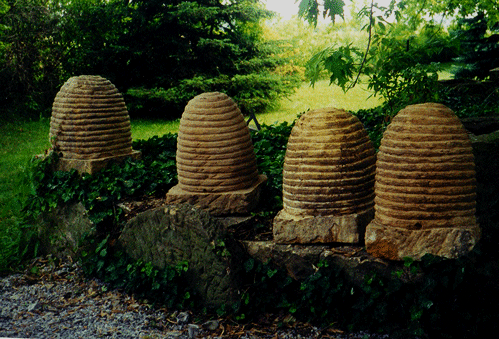
Beeing with Bees
W. Bee Druid Chris Park
April 22-25 in Jyderup, Denmark
Program
Learn about folklore and mythology connected to bees.
Practice bee communication.
Explore communal sound and song.
Braid a traditional Celtic bee skep - that you get to bring home.
Visit a local beehive and mead creator.
Make your own mead - that you will bring home.
Songs and storyteling around the fire.
Nourishing food.
Time to be in nature.
About Bee Druid Chris Park
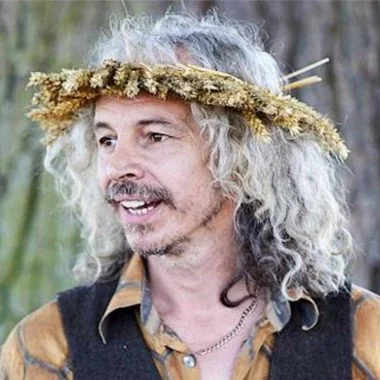
Chris lives in The Vale of the White Horse, England. Settled on an organic farm with his family, he maintains a simple life through arts & crafts and varying projects. His wide ranging work includes – beekeeping, skep-making, apitheraphy, traditional crafts, experimental archaeology, bronze & iron age are construction, sculpture, performance, folk music and storytelling, druidry, ritual and ceremony, lecturing and teaching. Chris Park is the world's leading expert on bee skeps and teaches skep-making for the British Beekeeping Association, the National Honey Show and is a founder member of the Beekeeping History Trust.
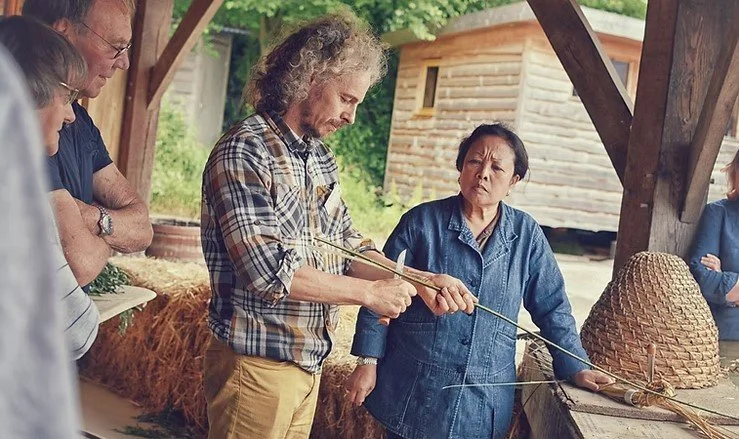
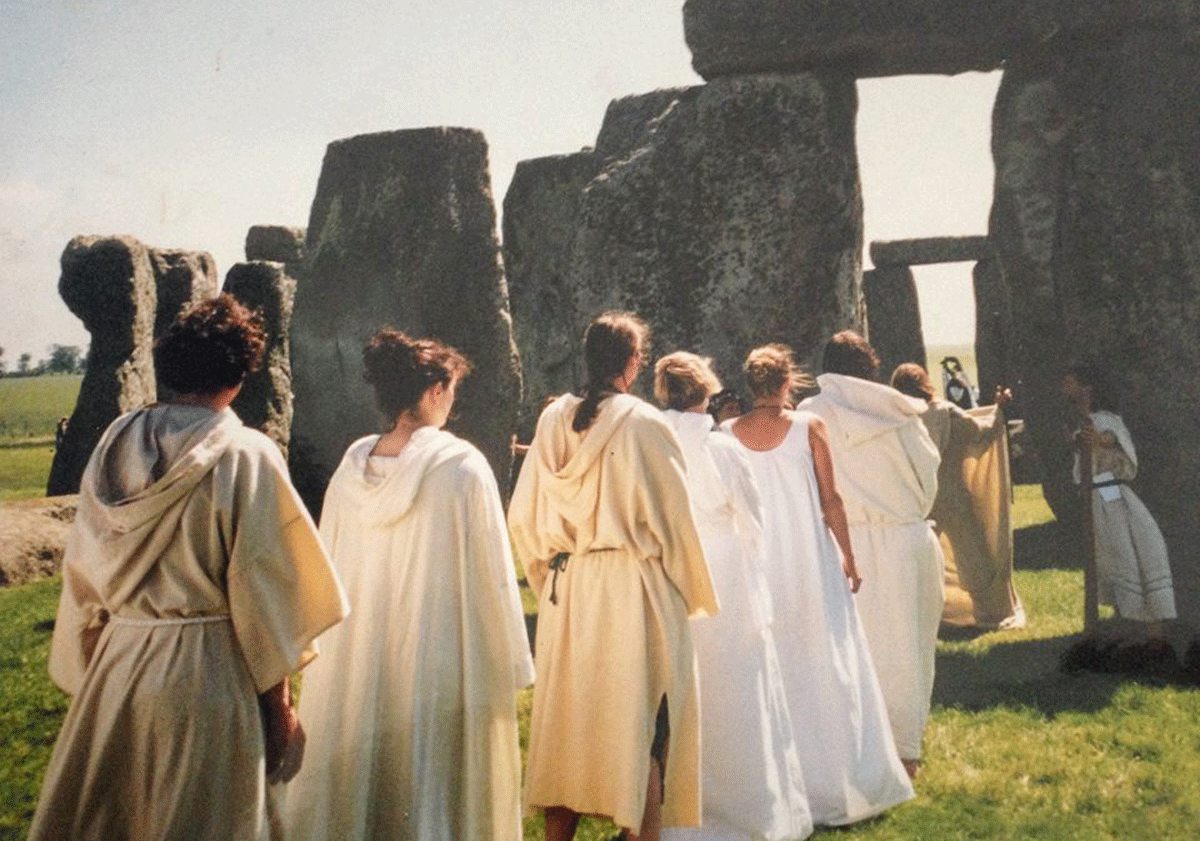
Collaborating with schools, wildlife trusts, nature reserves, communities, mental health projects, special interest groups, families and individuals.Involved with a number of British and European wisdom traditions, he is most active within Druidry. He began working with the the Order of Bards, Ovates & Druids in 1997. He hosts seasonal ceremonies within a sacred grove at home, and further afield as a Druid priest, celebrant and teacher.
Chris’ life took an interesting direction after he joined a project called ‘Surviving the Iron Age’ for the BBC 20 years ago, which followed 17 volunteers living as Iron Age Celts. Over 6 weeks of a wet Welsh autumn, they had to maintain their settlement just as the Celts did 2000 years ago. He was invited to be the ‘Druid’ of the settlement because of his knowledge of ancient British spirituality, religion and herbal medicine. A prolific beekeeper, he teaches skep making, skep-beekeeping, mead making and apitherapy, lecturing to beekeeping associations and other societies upon related subjects.
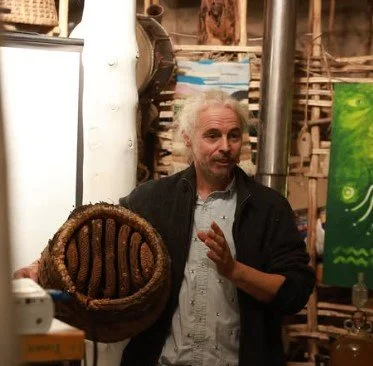
Often seen extolling the virtues of mead, metheglin and other traditional honey drinks. Chris tries to live an ecological lifestyle, growing some food, fetching wood and spring water, living close to the earth. He has welcomed visiting groups, elders, teachers and wisdom keepers from around the world to the U.K. who have the calling to travel as ambassadors for their communities and cultures. Enjoying comparative mythologies, the rich diversity and the beautiful quintessence of being that shines through all spiritual traditions.
Around the fire, if the stars are aligned, he can be a purveyor of ageless words, a seeker of the world's most ancient truths, lies and everything in between. You might call him a mellifluous fabulist, an erudite druid or a cunning linguist… but put simply he's just a decent fella, and a good storyteller, with tales for young and old, the innocent and the experienced, garnished with delicious music and song.
Check out Chris’ instagram: ChrisChalesPark
And an interview with him: The Truth About Beekeeping
A bit about the Workshops:
Skep Making
A bee skep is a traditional domed beehive made from coiled straw bound tightly with bramble, cane, or twine. Before the rise of modern box hives, skeps were the common home for honey bees across Europe, especially in places like England and Ireland.
Skep making is not only a traditional craft but a way of re-centering bees within a more natural rhythm of life. The domed, womb-like form, the continuous curve of a skep mirrors the hollow trees where wild colonies have nested for millennia, allowing bees to cluster in a thermally efficient sphere and regulate warmth with less stress. The thick straw walls breathe, buffering moisture and supporting a stable microclimate that can reduce mold and sudden temperature shifts. Because skeps are typically managed in smaller, low-intervention apiaries, they encourage attentive, seasonal beekeeping rather than intensive honey production. This approach can strengthen local resilience: healthier colonies mean more consistent pollination of surrounding plants, from garden herbs to wildflowers, supporting biodiversity across the wider landscape. In honoring the bees’ natural architecture, skep making becomes an ecological gesture—one that recognizes the hive as part of a living web rather than an isolated box of yield.
To make a skep, long straw is gathered into bundles and formed into a thick rope. This rope is coiled upward in widening circles, each layer stitched to the next with a large needle. The steady spiral mirrors the geometry of the hive itself—an echo of the sacred patterning bees create in wax.
During the workshop, Chris will gently guide us through each stage of skep making, weaving practical instruction with the rich mythology of the hive. As hands shape straw into spiral form, he will share ancient stories of bees as messengers between worlds. Chris will be available to answer questions throughout, offering advice on sustainable, small-scale beekeeping that supports colony health and respects natural cycles.
Mead Making
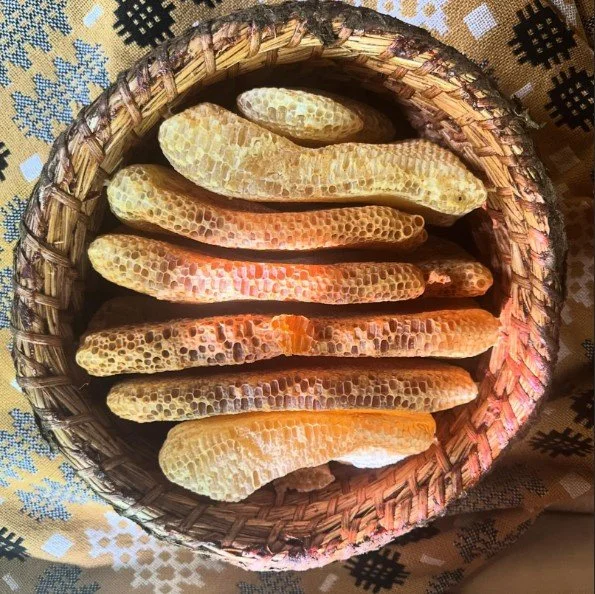
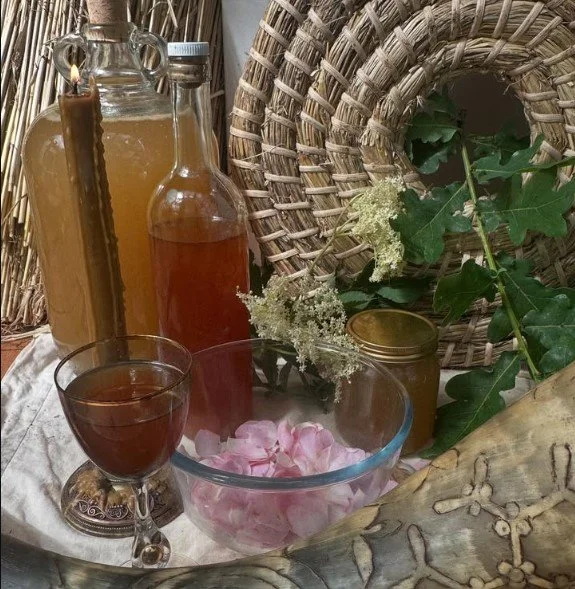
Chris will lead us through the alchemy of turning honey, water, and yeast into the golden drink of legend. As we learn the practical steps, balancing sweetness, wild yeasts, and understanding fermentation, he’ll share the deep mythology of mead as the drink of poets, warriors, and seers.
Mead held a place of deep honor in Celtic culture, where it was more than a drink—it was a symbol of sovereignty, inspiration, and sacred hospitality. In ancient Ireland and Scotland, mead was served in the great halls of chieftains and at seasonal gatherings, binding community through shared ritual. The very word “honeymoon” is often linked to the old custom of gifting newlyweds a moon’s cycle of mead to bless fertility and harmony. In Irish myth, the high kings were inaugurated at royal sites such as Hill of Tara, where feasting and ceremonial drinking affirmed the sacred bond between ruler and land. Mead was also associated with poetic inspiration, echoing the idea that honey gathered from the wild blossoms of the earth carried both sweetness and divine insight.
In Norse mythology, mead is the drink of wisdom, poetry, and divine inspiration. The most famous tale tells of the Mead of Poetry, created from the blood of the wise being Kvasir and guarded by giants. This sacred mead granted the gift of eloquence and insight to any who drank it. The god Odin sought it relentlessly, eventually winning it through cunning and transformation, carrying it back to the gods in Asgard. Mead was also central to the warrior afterlife in Valhalla, where fallen heroes were said to drink endlessly from the goat Heiðrún’s flowing bounty. In these stories, mead is not merely a beverage but a vessel of transformation linking wisdom, sacrifice, celebration, and the sacred bond between gods and humankind.
Practical:
The retreat will be by Skarresø Forest close to Jyderup, in Denmark.
We will meet at 10:00 on the 22nd, and say goodbye around 12:00 the 25th.
Sleep either in a shared dorm room or bring your own tent for the yard or forest.
Simple nourishing meals will be served.
You will be able to bring home your Skep and Mead (bring a glass bottle for Mead)
Price: 3.500kr/470EUR